
Man Arrested After Walking Channel Tunnel


A suspected illegal immigrant is believed to have walked almost the entire length of the Channel Tunnel before being apprehended by British officers.
 The man is thought to have entered the 31-mile tunnel is Calais, and was found near its exit in Folkestone, Kent on Tuesday.
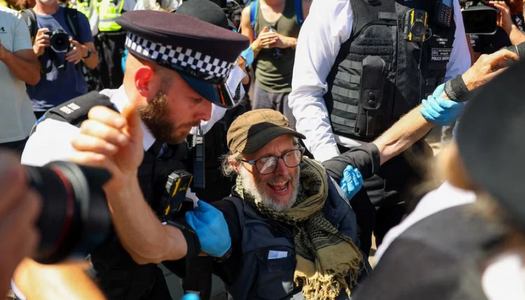
Abdul Rahman Haroun, 40, who is understood to be Sudanese, was arrested at the scene by Kent Police
Mr Haroun, of no fixed abode, has been charged with causing an obstruction to an engine or carriage using the railway under the Malicious Damage Act 1861.
At least nine people have died attempting reach Britain from Calais this year alone.
The Government has promised to boost security in Calais by sending additional security guards, sniffer dogs, fences and surveillance equipment including more CCTV to tackle the crisis.
It has also announced a raft of new measures designed to put off would-be asylum seekers, including threatening landlords who fail to evict migrants who do not have the right to live in Britain with a prison sentence of up to five years.
Furthermore, the Government has pledged to foot the bill for all extra costs incurred via Operation Stack, Kent police and crime commissioner Ann Barnes said.
Operation Stack involves parking – or stacking – up to 5,000 lorries on the M20 when Eurotunnel or Dover ferry services are disrupted.
“It’s only right and proper that the extra money Kent Police spends to deal with this national civil emergency comes from central government coffers and not from our local policing budget,” Commissioner Barnes said.
Despite the new measures, the former British ambassador to France, Sir John Holmes, has warned there is no “magic solution” to the number of desperate migrants attempting to cross the Channel.
“This problem has been around for quite a long time and there is not a magic solution,” he said, adding that Calais crisis must be viewed in a European context.
“Although it’s a very difficult problem and causes a lot of obstacles and complications, it is a relatively small part of a much bigger problem which is the number of people trying to get illegally into Europe from the Middle East and North Africa,” he said.
“The problems Greece and Italy are facing are much, much worse. These are quite big numbers there, whereas what we are facing in Calais is relatively small.
“There is a constant flow coming across into Europe in very large numbers and there’s no sign of that slowing down, which means ultimately that we have to be more active to tackle some of these problems at source.
“Ultimately if we don’t deal with that in some way we are always facing an uphill struggle with people desperate to come because life is better here.”
His comments came as hundreds of migrants, who were rescued after their boat capsized in the Mediterranean, arrived in Italy.
Some 367 survivors, mostly Syrians fleeing the country’s civil war, were saved as ships arrived in response to a distress call sent a day after the smuggler’s fishing vessel left Libya.
The vessel was estimated to have been carrying 600 migrants.
So far, 25 bodies have been recovered from the water but it is thought as many as 200 may have drowned, with the search continuing.





































পুরানো সংবাদ সংগ্রহ

| সোম | মঙ্গল | বুধ | বৃহ | শুক্র | শনি | রবি |
|---|---|---|---|---|---|---|
| ১ | ২ | ৩ | ৪ | |||
| ৫ | ৬ | ৭ | ৮ | ৯ | ১০ | ১১ |
| ১২ | ১৩ | ১৪ | ১৫ | ১৬ | ১৭ | ১৮ |
| ১৯ | ২০ | ২১ | ২২ | ২৩ | ২৪ | ২৫ |
| ২৬ | ২৭ | ২৮ | ২৯ | ৩০ | ৩১ | |
| « সেপ্টেম্বর | নভেম্বর » | |||||
Fax: +44 (0) 871 698 1971Email: info@shirshobindu.com (Admin) news@shirshobindu.com (Newsroom)